However, rapid weight loss and significant dietary changes can also place stress on the body. So, what happens when the kilograms come off quickly? Hair may become noticeably thinner, lose its natural volume, and appear dull. It may not necessarily fall out in large amounts, but the loss of volume can be obvious.
How should you respond in such a situation, and how can you prevent your desire for a slimmer figure from negatively affecting your health and appearance?Why Do Weight Loss and Carbohydrate Restriction Thin the Hair?
Our hair requires an adequate supply of energy and nutrients to grow and regenerate normally. When the body is placed in a significant calorie deficit and deprived of its main source of readily available energy—carbohydrates—it activates survival mechanisms. The body recognizes that "something has changed" and begins conserving energy. Because hair growth is not essential for survival, nutrients are redirected to vital organs.
This phenomenon is known in dermatology as
telogen effluvium. It is a condition in which a larger number of hair follicles prematurely enter the resting (telogen) phase due to the stress caused by rapid weight loss or a restrictive diet. As a result, hair becomes thinner and loses volume, typically becoming noticeable several months after starting a diet [1]. Studies have shown that weight loss-related telogen effluvium commonly occurs after an average weight loss of around 15% and at a rate of approximately 2 pounds per month [1]. Women and older adults appear to be particularly susceptible to this condition [1].
In the normal hair growth cycle, approximately 85% of hair follicles are in the anagen (growth) phase, while about 15% are in the telogen (resting) phase [2]. However, when the body experiences significant stress, such as rapid weight loss, this balance can change dramatically, causing a large proportion of anagen hairs to prematurely enter the telogen phase, leading to excessive hair shedding [2]. This mechanism, which also involves inflammatory mediators and oxidative stress, has been confirmed by numerous dermatological reviews [3].
Common Myths and Real Causes of Hair Loss
In reality, hair loss during dieting is only a symptom. The actual cause is most often one or a combination of the following factors:
| Cause |
Why it affects hair |
Scientific explanation |
| Insufficient calorie intake |
The body redirects energy away from non-essential functions, such as hair growth |
Significant weight loss caused by calorie restriction reduces thyroid hormone and leptin levels, affecting metabolism [5]. |
| Insufficient protein intake |
Hair is made of keratin – without enough protein, there is not enough building material for growth |
Dietary protein deficiency directly affects hair growth and can cause acute telogen effluvium [4]. |
| Iron deficiency |
Iron is essential for oxygen transport to hair follicles; anaemia is one of the most common causes of TE |
Studies show that patients with telogen effluvium often have reduced serum ferritin levels, indicating iron deficiency that affects hair follicle cells [6]. |
| Zinc deficiency |
Zinc regulates cell division and tissue regeneration, including hair follicle function |
Zinc is an essential mineral for enzymes involved in protein synthesis and cell division. Its deficiency can contribute to hair loss and brittle hair [4] [7]. |
| Rapid weight loss |
Sudden weight loss represents physiological stress for the body, which can trigger telogen effluvium |
Rapid weight loss is a recognised trigger for the premature transition of hair follicles into the telogen phase [1] [2]. |
How Long Does Hair Loss Last After Weight Loss and Does Hair Grow Back?
The timeline of hair shedding in telogen effluvium is relatively predictable. Hair loss usually begins 2 to 4 months after the start of significant weight loss or a restrictive diet [1] [2]. The shedding itself, or the period of increased thinning, typically lasts around 3 to 6 months.
The good news is that hair grows back. Telogen effluvium caused by weight loss is, in most cases, a temporary condition. Once the underlying cause is addressed—meaning body weight is stabilised and the body receives sufficient nutrients—hair follicles can recover from the resting phase. After shedding subsides, it may take several more months (often 6 to 12 months from the beginning of symptoms) before you notice improvements in hair density and volume. The American Academy of Dermatology (AAD) confirms that acute telogen effluvium often improves on its own once the trigger is removed. Patience is essential in this process.
One of the first and most effective approaches to restoring hair volume is gradually reintroducing carbohydrates into the diet, within a balanced range. During a significant energy deficit, the body adjusts its priorities. Processes that are not essential for immediate survival, such as active hair growth, may temporarily slow down. For most people, completely eliminating carbohydrates is not necessary.
More importantly, the diet should provide sufficient energy, protein, minerals, and high-quality sources of complex carbohydrates, such as vegetables, legumes, fruits, and whole grains. Reduced protein intake during dieting has been shown to be associated with acute telogen effluvium [4].

The Impact of Weight Loss on Hormonal Balance
When we lose weight, our body detects the change. It is not only about reducing fat stores but also about a complex response involving the entire endocrine system. Hormones act as chemical messengers that regulate metabolism, appetite, and fat storage.
During strict calorie restriction, levels of leptin, the satiety hormone produced by fat cells, decrease. Lower leptin levels signal to the brain that the body is experiencing a state of energy deficiency, which slows metabolism and increases feelings of hunger [5].
Thyroid hormone levels also decrease, further slowing basal metabolic rate and contributing to the body's metabolic adaptation to reduced calorie intake [5].
In women, rapid weight loss and insufficient energy availability can affect reproductive hormones. Weight loss associated with amenorrhea (the absence of menstruation) is a condition involving reversible functional inhibition of the hypothalamic-pituitary-ovarian axis [9]. This can lead to prolonged oestrogen deficiency, which affects not only reproductive health but also bone health and the cardiovascular system [9]. In addition, dietary stress often increases cortisol levels (the stress hormone), which may make further weight loss more difficult and promote fat accumulation around the abdominal area.
Weight Loss Medications and Hair Loss: What Do the Latest Studies Show?
Recently, the connection between hair loss and popular weight loss medications, as well as treatments for type 2 diabetes that act as GLP-1 and GIP receptor agonists, has become a widely discussed topic
(e.g., Ozempic, Wegovy, Mounjaro, Zepbound, with active ingredients such as semaglutide and tirzepatide).
Many users of these medications report noticeable hair thinning, and recent studies have also supported these observations. Systematic reviews and pharmacovigilance studies suggest that these medications, particularly semaglutide and tirzepatide, may be associated with an increased risk of developing telogen effluvium compared with some other medications [11].
However, experts emphasise an important detail:
Hair loss is most likely not a direct result of the active ingredient (the medication) affecting the hair follicle itself. Instead, it appears to be an indirect consequence of rapid weight reduction and related factors.
Medications such as Wegovy and Mounjaro significantly reduce appetite and slow gastric emptying, which can lead to:
- a dramatic reduction in calorie intake,
- rapid weight loss (which places significant stress on the body),
- frequent deficiencies in essential macro- and micronutrients (particularly protein, iron, and zinc) [12].
In other words: the body responds to rapid medication-assisted weight loss in much the same way as it responds to a very strict diet or starvation—it redirects energy away from hair growth. The good news is that, in this case as well, hair loss is usually temporary (telogen effluvium) and the condition gradually improves once body weight stabilises and adequate nutrient intake is restored.
How Fast Is It Safe to Lose Weight?
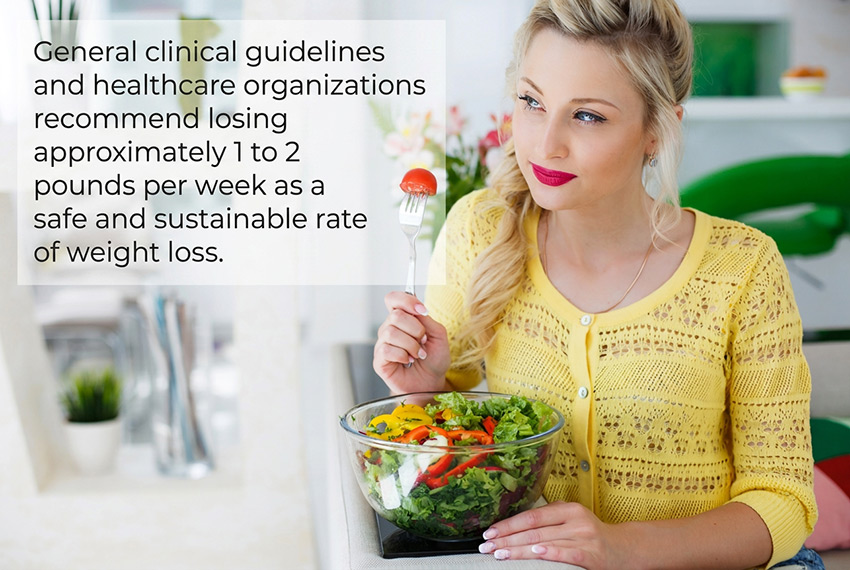
To prevent hormonal imbalances, muscle loss, and hair shedding, it is essential to lose weight at a moderate pace. This means creating a calorie deficit of 500 to 750 calories per day. Faster weight loss significantly increases the risk of developing gallstones, metabolic slowdown, and, of course, telogen effluvium.
Weight loss should be a marathon, not a sprint.
Should I Take Supplements During Weight Loss?
This is one of the most common questions people ask when they notice their hair becoming thinner. The answer is not straightforward, as it depends on whether a deficiency is actually present in the body.
The general principle is the following: without a confirmed deficiency, dietary supplements are not necessarily needed and are unlikely to provide significant benefits [4] [7]. However, when blood tests reveal a specific deficiency, appropriate supplementation can provide valuable support for hair recovery. The key is therefore not to take supplements blindly.
| Supplement |
When it may be beneficial |
Note |
| Iron / Ferritin |
Only when a deficiency has been confirmed through blood tests |
Excess iron can be harmful – never supplement without test results [4]. |
| Vitamin D |
When blood levels are low |
Often deficient, especially during winter. Systematic reviews show beneficial effects of supplementation when a deficiency is present [7]. |
| Zinc |
When a deficiency has been confirmed |
Excessive zinc intake can interfere with the absorption of other minerals and may cause toxicity [4] [7]. |
| Biotin |
Only in cases of rare deficiencies |
Without a deficiency, it has no proven effect on hair. Studies show insufficient evidence to support supplementation in healthy individuals [10]. |
| Protein supplements |
When dietary protein intake is insufficient |
Often more important than biotin, as hair is made of keratin. |
Biotin deserves special attention because it is extremely popular in marketing for hair supplements.
However, scientific research clearly shows that biotin only helps in cases of genuine deficiency, which is relatively rare among adults without specific medical conditions or restrictive diets [10]. A much more meaningful investment is ensuring an adequate daily protein intake, as hair is primarily made of the protein keratin. Without sufficient dietary protein, no supplement can replace this essential building material.
How to Approach Weight Loss in a Healthy and Sustainable Way?
The conclusion is that, of course, it is important to feel comfortable with our appearance. However, it is even more important to maintain a healthy and balanced diet. Food influences countless processes in our body, which is why it is essential to maintain balance, reduce inflammation, and avoid placing unnecessary stress on the body.
Just as uncontrolled weight gain can lead to health problems, careless and extreme weight loss can also be highly problematic.
To avoid negative effects on your hair and hormones, follow these universal guidelines:
- Increase your protein intake: Protein is a building block of the body and hair. There are countless recipes based on protein-rich foods that also include moderate amounts of carbohydrates.
- Do not completely eliminate carbohydrates: Include high-quality carbohydrate sources according to your energy needs and lifestyle.
- Daily physical activity: To maintain metabolism and muscle mass, it is not necessary to spend hours in the gym. Even 35 minutes of moderately brisk walking every day can be beneficial.
- Stay adequately hydrated: Drinking enough water is essential for metabolism and the removal of waste products from the body.
With a balanced approach, you can achieve your desired body shape while maintaining healthy hair density, balanced hormones, and, most importantly, overall health.
References and Scientific Literature
[1]
Telogen Effluvium Associated With Weight Loss: A Single Center Retrospective Study
[2]
Telogen Effluvium - StatPearls - NCBI Bookshelf
[3]
Telogen Effluvium: A Review of the Literature
[4]
Diet and hair loss: effects of nutrient deficiency and supplement use
[5]
The Fall in Leptin Concentration Is a Major Determinant of the Metabolic Adaptation Induced by Caloric Restriction
[6]
The Diagnostic Value of Serum Ferritin for Telogen Effluvium: A Cross-Sectional Comparative Study
[7]
The Role of Vitamins and Minerals in Hair Loss: A Review
[8]
Hair loss: Diagnosis and treatment - American Academy of Dermatology
[9]
The effects of weight loss-related amenorrhea on women’s health and the therapeutic approaches: a narrative review
[10]
A Review of the Use of Biotin for Hair Loss
[11]
Gupta AK et al. GLP-1 therapies and hair loss: A systematic review of current evidence and implications for counseling. Sci Prog. 2026.
[12]
Haykal D. Alopecia and Semaglutide: Connecting the Dots for Patient Safety. J Cosmet Dermatol. 2025.
Read also:
Hormones >>
Vagus Nerve >>