The academic literature describes it as a key component of the parasympathetic nervous system — that part of the autonomic nervous system involved in rest, digestion, regulation of heart rhythm, recovery, and calming the body after a stress response.
In recent years, interest in it has grown considerably, yet it is important to emphasise that the vagus nerve is not a "miracle switch", but rather part of an extraordinarily complex system that encompasses the brain, heart, respiratory system, digestive tract, immune system, hormones, and everyday habits.
The vagus runs from the brainstem through the neck into the chest and abdominal cavity,
where it is involved in regulating the heart, lungs, and digestive organs. Particularly noteworthy is the fact that the majority of its fibres transmit information from the body towards the brain. Academic sources frequently cite that approximately 80% of its fibres are afferent, meaning that the brain continuously receives information about the body's internal state via the vagus nerve.
This is one of the reasons why breathing, digestion, the sense of safety, physical tension, and emotional well-being are so closely interconnected.
How the vagus nerve works:
| Area of Function |
Role of the Vagus Nerve |
| Heart |
Helps regulate heart rate and parasympathetic tone. |
| Breathing |
Involved in the connection between respiratory rhythm, heart rate, and the calming of the body. |
| Digestive tract |
Transmits information between the gut and the brain, and participates in digestive regulation. |
| Immune response |
Associated with the cholinergic anti-inflammatory pathway, which is involved in regulating inflammatory signals. |
| Stress response |
Helps the body transition from a state of activation to a state of recovery and regeneration. |
How do we recognise that vagal regulation may not be optimal?
When people say that their "vagus nerve is not functioning well", they do not usually mean a proven injury to the nerve, but rather a feeling that the body struggles to calm down, that digestion is sensitive, that the stress response is excessive, or that recovery after exertion is slow.
Suboptimal vagal or autonomic regulation can manifest as difficulty calming down after stress, a sense of inner tension, a frequent feeling of being "on alert", shallow breathing, reduced tolerance for exertion, restless sleep, or a feeling of fatigue despite rest. Because the vagus nerve also interacts with the digestive organs, some people may experience a sensitive gut, bloating, a feeling of heaviness after meals, changes in appetite, or fluctuations in digestive rhythm.
Signs of imbalance (poor vagal tone)
- chronic anxiety or a feeling of "constant tension"
- digestive issues (bloating, constipation, IBS)
- heart palpitations or irregular heartbeat
- poor stress resilience, becoming easily "overwhelmed"
- sleep difficulties
- reduced ability to relax after stress
How can we influence the vagus nerve?
The vagus nerve is most easily influenced indirectly, through habits that shift the autonomic balance. The best-researched approaches are not dramatic but simple: breathing, movement, sleep, nutrition, stress regulation, and social connection. Their effect stems from repetition. The body learns from everyday signals — whether the environment is safe, whether it has sufficient rest, whether it moves regularly, whether it breathes calmly, and whether digestion functions in a steady rhythm.
1. Slow breathing: the simplest entry point into parasympathetic balance
Breathing is one of the few processes that is simultaneously automatic and consciously controllable. This is precisely why it is a useful tool for influencing the autonomic nervous system. Researchers explain that during inhalation, vagal output decreases and heart rate accelerates, while during exhalation, vagal output is restored and heart rate slows.
In practice, this means that for calming purposes it is often beneficial to breathe in a pattern where the exhalation is slightly longer than the inhalation. One example is five minutes of breathing in the following rhythm: inhale through the nose for approximately four seconds, a brief natural pause, and exhale for six seconds. The breathing should be gentle, without forcing and without any sense of air deprivation. For people with respiratory, cardiovascular, or panic-related difficulties, it is advisable to begin very gently and, if necessary, under professional guidance.
2. Physical activity: stress for the body that builds resilience over time
Regular moderate physical activity is one of the most reliable ways to support autonomic balance. Movement briefly activates the body, but over the long term it improves metabolic health, sleep, mood, and cardiovascular capacity. Because the vagus nerve is part of a broader autonomic system, it is not influenced in isolation but through the overall lifestyle. A walk after a meal, gentle cycling, swimming, hiking, strength training, and stretching can all be practical ways to help the body transition between activation and calm.
3. Digestion and the gut: the vagus as an information highway
The vagus nerve is one of the main pathways in the gut-brain axis. Bonaz and colleagues emphasise that the vagus is important for bidirectional communication between the brain and the digestive tract, as well as for neuro-immune connections. It is therefore unsurprising that stress frequently affects digestion, and that digestive difficulties can in turn affect well-being. Supporting the digestive system begins with the basics: regular meals, sufficient fibre, adequate hydration, slower eating, understanding one's own tolerances, and reducing unnecessary dietary stress.
Individual variation is important here. Fermented foods, legumes, and a higher-fibre diet can be highly beneficial for some, while for others with a sensitive gut they may temporarily cause more difficulties. The goal is not to follow a universal trend, but to gradually build a dietary rhythm that supports digestion and well-being.
4. Calming, meditation, and body awareness
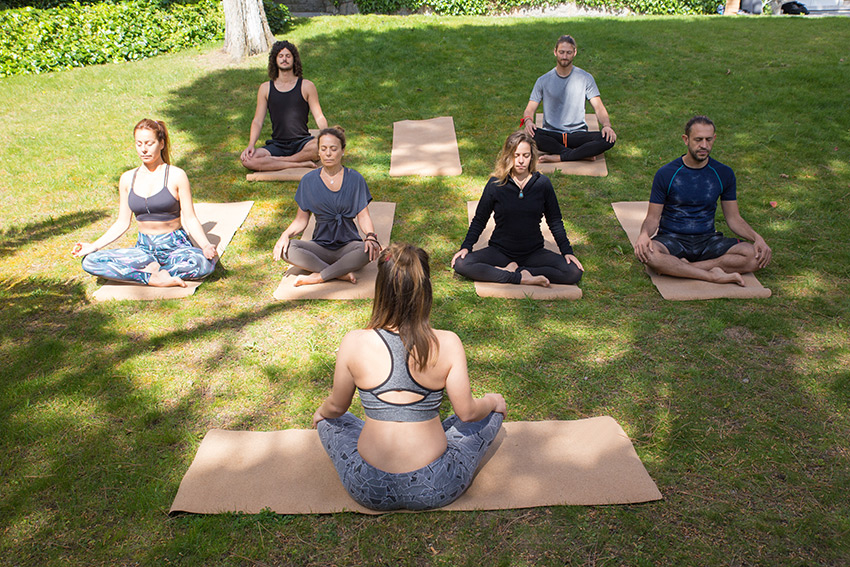
Gerritsen and Band proposed, in a theoretical review, a model of respiratory vagal stimulation, according to which many contemplative practices - such as meditation, yoga, and related forms of mindful movement - work in part through the regulation of breathing and autonomic balance. This does not mean that all the benefits of these practices are attributable to the vagus nerve, but it does suggest that breathing is one of the likely mechanisms.
For everyday use, a simple practice is sufficient: a few minutes of quiet sitting, observing the breath, gently lengthening the exhalation, light stretching, or a walk in nature. What matters here is not perfect technique, but a recurring signal to the body that it is safe to settle.
Supporting the vagus through rhythm, not force
The vagus nerve is an important part of the system that connects the brain, heart, respiratory system, digestive tract, and immune response. When its regulation is not optimal, this can manifest as reduced stress tolerance, difficulty calming down, more sensitive digestion, poorer sleep, or lower autonomic adaptability. However, these signs are not specific, and for pronounced or persistent difficulties, professional consultation is necessary.
The most meaningful way to support the vagus is not through aggressive stimulation, but by creating conditions in which the body can return to balance. Slow breathing with a lengthened exhalation, regular movement, quality sleep, a balanced diet, time in nature, relaxation practices, and safe relationships are simple ways through which we influence the autonomic nervous system on a daily basis. The academic literature clearly supports the connection between the vagus nerve, HRV, stress, the digestive tract, and neuro-immune regulation, while at the same time cautioning that oversimplified promises are not appropriate.
Preberite si še - Kako začnem meditirati
Note: This article is informational in nature and is not a substitute for medical consultation, diagnosis, or treatment. For chronic conditions, illness, pregnancy, use of medication, or pronounced symptoms, please consult a doctor or another qualified healthcare professional.
Sources:
[1]
Cerritelli et al. (2021 ): A Review on the Vagus Nerve and Autonomic Nervous System During Fetal Development
[2]
Bonaz, Sinniger & Pellissier (2017 ): The Vagus Nerve in the Neuro-Immune Axis
[3]
Kim et al. (2018 ): Stress and Heart Rate Variability: A Meta-Analysis and Review of the Literature
[4]
Goldberger et al. (2019 ): Autonomic Nervous System Dysfunction
[5]
Magnon, Dutheil & Vallet (2021 ): Benefits from one session of deep and slow breathing on vagal tone and anxiety
[6]
Gerritsen & Band (2018 ): Breath of Life: The Respiratory Vagal Stimulation Model of Contemplative Activity
[7]
Austelle et al. (2024 ): Vagus nerve stimulation (VNS): recent advances and future directions