The short answer is: everyone needs some form of personal space. Not necessarily their own room. Not necessarily silence all day long. And not to the same extent as someone else. But most of us need moments and boundaries that allow us to temporarily set aside the roles we carry.
We don't need personal space only when we're tired or overwhelmed. We also need it for the things that bring us joy: our own interests, creativity, exploration, and the feeling that we have a part of life we can shape in our own way.
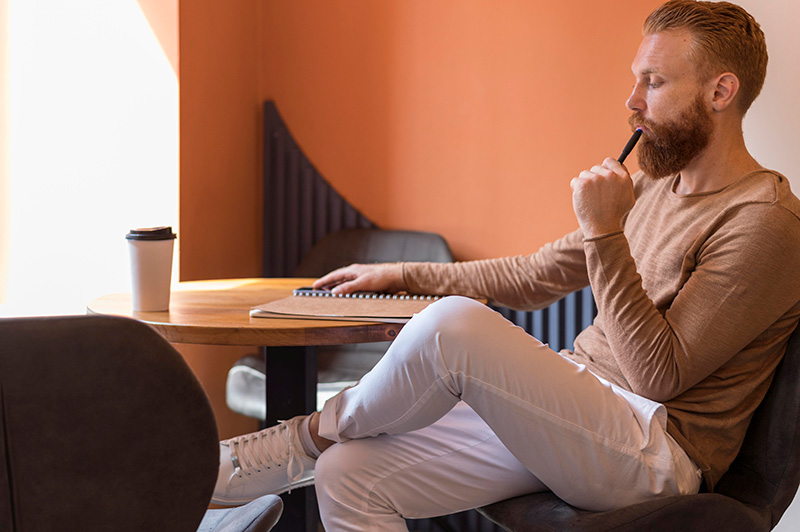
Perhaps it's a space where no one enters unless you invite them in. It's arranged exactly the way you like it: it can be messy if that's what feels natural to you, or meticulously organized down to the last detail. Maybe there's an armchair, a little table, a book you love to read, and a cup of coffee that's still steaming. For a moment, the noise of the outside world fades away.
Perhaps it's not an armchair at all. Maybe it's a desk where you work on a hobby you're not ready to talk about yet. Not because you're doing anything wrong, but because the idea is still fragile, unfinished, and entirely your own. You're not yet sure whether it will work out, how others will react, or whether you even want to share it. And you want the freedom to spend hours working on it without having to explain yourself.
Sometimes, that little corner is also a place where you can let it all out: where you can cry, feel angry, write, pace back and forth, or simply remain silent. A place where you don't have to immediately comfort someone, explain why you're in a bad mood, or pretend that everything is fine.
Not everyone needs a room. But we all need to feel that we can take off our armor.
Privacy isn't just about square meters.
It's also about feeling that, for a little while, we can decide for ourselves who has access to us, how much stimulation we take in, and what we don't have to deal with at that moment.
The need for solitude varies from person to person. Some people find it easiest to unwind in silence after a long day, while others prefer talking to someone they feel safe with. Some need a walk, music, or hands-on activities. Personal space, therefore, doesn't necessarily mean physical separation from others. Sometimes, it simply means being able to decide for ourselves how many conversations, sounds, and demands we're willing to take on at a given moment.
We don't need complete silence all day long. What matters, though, is having enough opportunities to take a break from demands, noise, and the constant expectation of being available. Such breaks can help reduce feelings of overwhelm and create better conditions for rest.
If You're a Parent, Does Taking Time for Yourself Mean Withdrawing from Your Child and Partner?
A sense of guilt often creeps in. Am I withdrawing from my partner? Am I neglecting my child? Is it selfish to want some time alone?
Not necessarily. Often, it's quite the opposite.
When you're constantly feeling distressed, frustrated, or tense, it's harder to be the best version of yourself. You may become more short-tempered, angry, or impatient without any obvious reason. Your loved ones may then see you as someone who is never satisfied, when in reality, you may simply have gone too long without the space you need to unwind.
A parent who needs 20 minutes alone doesn't love their child any less. A partner who wants to spend an evening pursuing a hobby isn't necessarily running away from the relationship. It may mean they want to show up in the relationship with more patience, energy, and focus.
Of course, personal space doesn't mean simply disappearing without an agreement while leaving everything on the other person's shoulders. A healthy withdrawal also involves responsibility: you communicate when you'll be unavailable, how long you'll need, and when you'll return to shared time. That way, personal space doesn't become a competition between you and your family, but an agreement that supports both sides.
For example, instead of saying, "Leave me alone!" you could say, "I've noticed that I've been feeling on edge lately. I need 20 minutes of quiet to calm down."
This isn't about turning against your family. It's about taking care of your connection with them.
What If You Live in a 31-Square-Meter Apartment with Your Partner and Child?
This is the reality for many people. In an apartment building, living in just 31 square meters with a partner and child, you may have sacrificed your own space long ago for a child's bed, a wardrobe, a kitchen table, or a home office. In such circumstances, advice like "set up your own room" can feel almost insulting.
If you don't have enough space, you're not looking for the perfect little corner. You're looking for small, repeatable pockets of privacy. They won't solve the problem of limited living space, but they can create a sense of relief and give you at least some control over your time.
1. Divide your time first, not your space
In a small apartment, it's sometimes more practical to agree on personal time than to claim a square meter of your own. For example, each adult gets 20 or 30 minutes to themselves three times a week, when they're not "on duty." The other person takes care of the child, phones are silenced, and non-urgent conversations can wait.
The agreement should apply to both of you. Personal space isn't a privilege reserved for whoever speaks the loudest or feels the most exhausted. It's something you should share as fairly as possible.
2. Create a portable personal space
Your little corner could be a box, basket, or backpack that you open only during your own time: a book, headphones, a notebook, colored pencils, craft supplies, coffee, a blanket, or anything else that helps you unwind. When your apartment can't offer a permanent space, a ritual and a few personal belongings can create the feeling that this is your time.
This isn't a substitute for a private room. It's a practical way to make sure you still have something of your own.
3. Set a small, visible boundary
An armchair in the corner, a chair by the window, headphones, a small lamp, or a curtain may seem like insignificant details. But they can serve as agreed-upon signals. For example, when someone is wearing headphones, interrupt them only if something important comes up. When a particular lamp is on, they have 15 minutes to themselves.
For a child, this can also be a valuable lesson: everyone has boundaries, and after taking some time apart, we come back together.
4. Make use of spaces outside your home
A bench outside your apartment building, a library, a walk to the shop, a short stroll, your car, a park, or a walking trail may not always be ideal, but they can be realistic options. Sometimes, just 15 minutes without your phone between work and home can offer a more genuine break than an hour on the sofa while remaining available to everyone.
If it's safe and practical, make it a predictable part of your day rather than an "escape": first, ten minutes to yourself, then home.
5. Protect your hobby, even if it's not ready to be shared
Perhaps you need space for writing, making things, learning, music, drawing, or a project you don't want to share just yet. That's neither childish nor a waste of time. Creativity often needs a period when it's protected from other people's opinions.
Explain it simply at home: "This matters to me. I'm not ready to talk about it yet, but I need one hour a week to work on it." You don't owe anyone all the details, but you do owe them clarity about arrangements that affect your time together.
6. Create a transition between work and home
If you go straight from the noise of work into the noise at home, the tension of the working day often stays with you. Try creating a short transition: a ten-minute walk, a drive without a podcast, changing your clothes, taking a shower, having coffee on a bench, or taking a few slow breaths by an open window.
This won't solve every problem. But it can signal to your body that one part of the day is coming to an end.
When Your Own Space Is No Longer Enough
Sometimes, a small agreement at home, 20 minutes without interruptions, or a short break after work can make a big difference. But sometimes, the pressure is too great to be relieved by a little personal space alone.
If you experience severe exhaustion, significant sleep problems, anxiety, low mood, frequent physical symptoms, or a feeling that you're no longer able to cope with everyday tasks for weeks or months, it's worth speaking to your GP, a psychologist, or another qualified professional. This isn't a failure. It's about supporting a system that has been carrying too much for too long.
In Conclusion: Personal Space Isn't an Escape from Life
Perhaps your own little corner isn't a room with a door. Maybe today it's just a chair where no one interrupts you for 20 minutes. Maybe it's a walk around the block, an armchair where you can enjoy a book and a cup of coffee, a table where you work on your hobby, or a moment of silence in your car before you unlock the front door.
You don't have to disappear to have space of your own. You just need enough room to take off your armor for a moment.
Because a person who has nowhere to set aside their roles doesn't become stronger. Often, they simply become more exhausted. And taking care of yourself isn't about withdrawing from the people you love. It's a way of returning to them more present, more gentle, and more yourself.
This article is for informational purposes only and does not replace medical examination, diagnosis, or treatment.
Sources
1.American Psychological Association. (2024). How stress affects your health.
2.Wendsche, J., & Lohmann-Han, H. (2017). A Meta-Analysis on Antecedents and Outcomes of Detachment from Work. Frontiers in Psychology.
3.Bergefurt, L. in sod. (2023). How physical home workspace characteristics affect mental health: a systematic review. Work.
4.Mayo Clinic. (2024). Relaxation techniques: Try these steps to lower stress.