Our parents, especially our mothers, are supposed to protect us as we grow up. Their role is to create a safe haven where we can simply be children. Yet many adults, often in their 30s or 40s, find themselves experiencing deep, unconscious anger toward their mothers.
If, as a child, you had to be overly empathetic, grow up too quickly, or take care of your parents' emotional needs, it may be a sign that something was wrong with the way you were raised.
Our mother is our first universe. We come from her, and on a biological level, we expect her to protect us. We expect her to be there for us and to be someone we can always rely on. When these fundamental needs for emotional security go unmet, deep subconscious patterns can develop, as research in attachment theory also suggests. [1]
Later in life, these patterns may manifest as emotional distress, relationship difficulties, a tendency to move from one romantic partner to another, or even the development of autoimmune diseases. [2] Much of this unfolds in our subconscious, beyond our awareness. Only when we begin to recognize these patterns can the process of healing begin.
What Is the Mother Wound and Emotional Neglect?
In psychology, a lack of emotional support from one's mother is often referred to as the
“mother wound.” It can occur when a mother provides for a child's physical needs, such as food, clothing, and shelter, but is unable to offer emotional security, warmth, and validation. Research, including studies by Dr. Tiffany Field, suggests that maternal emotional unavailability, even when a mother is physically present, can negatively affect a child's ability to regulate emotions (emotional regulation). [3]
A child growing up in such an environment may learn to suppress their emotions. Dr. Gabor Maté, a renowned physician and trauma expert, offers an explanation for this process. He emphasizes that emotional neglect can teach children that their feelings are unwelcome or unimportant, leading them to disconnect from their own emotions as a survival mechanism.
“Much of what we call personality is not a fixed set of traits, but rather coping mechanisms that a person acquired during childhood.” – Dr. Gabor Maté [4]
The problem arises when a child begins to feel responsible for their mother's emotional state. For example, if a mother is overly preoccupied with the father, constantly trying to solve his problems, or emotionally unavailable because of her own trauma, she may struggle to give her children the attention they need. Finding a balance is important, but when that balance is missing, a child may internalize the belief: “I'm not good enough to be loved.”
Studies suggest that children who experience emotional neglect may be more likely to develop anxious or avoidant attachment styles in adulthood, which can significantly affect their mental health. [1]
Through a Child's Eyes: How a Child Experiences a Wound They Cannot Understand
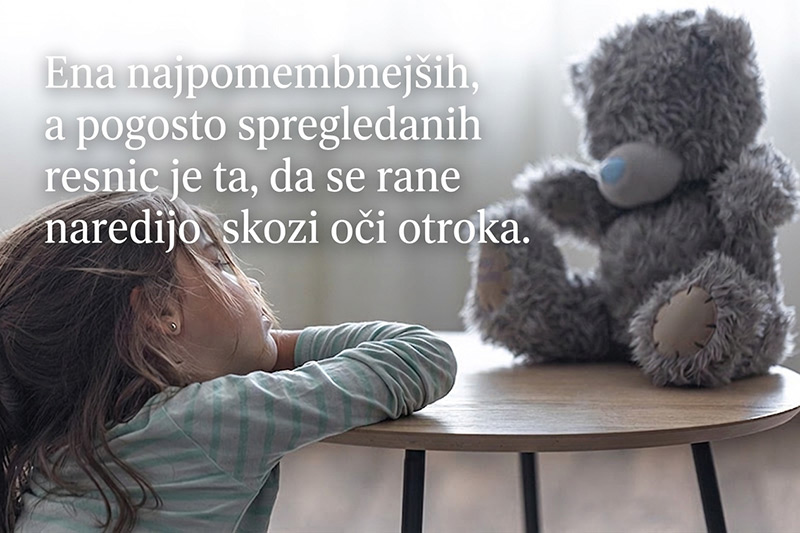
One of the most important, yet often overlooked, truths is that emotional wounds are shaped by a child's perspective. Children do not have the adult tools needed to understand what is happening around them. A child doesn't think, “My mother is emotionally unavailable because she carries unresolved trauma of her own.” A child thinks in simple, absolute terms:
“My mother doesn't love me. There must be something wrong with me.”
Children are naturally egocentric in their thinking. This isn't selfishness, but a normal stage of development. They interpret everything happening around them through the lens of their own experience. When their mother is absent, emotionally distant, preoccupied with her own problems or with their father, and lacks the time or energy to attend to them, children cannot understand the complexity of the adult world. All they see is: “I'm not important enough.” All they see is: “My feelings are wrong.” All they see is:
“I have to stay quiet, be good, and be invisibly perfect if I want to be loved.”
This interpretation can become deeply ingrained, not as a conscious thought, but as a physical sensation and a set of underlying beliefs about ourselves and the world.
Children don't necessarily store these experiences as words, but as emotional memories and bodily responses they may struggle to explain years later. [3] This is precisely why the wound can remain hidden: it formed at a time when we didn't yet have the words to describe it.
As we grow older, our perspective changes. As adults, we gain the ability to understand our mother's story, her own childhood, her limitations, and her unresolved pain. Perhaps, for the first time, we see that she, too, may have been a victim of her circumstances and was doing the best she could with the tools she had. This understanding can be valuable and may be an important part of forgiveness.
But here's the catch: understanding something intellectually is not the same as healing emotionally. Many adults say, “I understand why she was the way she was. I know she had a difficult childhood.” Yet they still feel anger, emptiness, or sadness they cannot explain. Why?
Because the wound did not form in the adult mind. It formed in the child's experience. And that inner child, who once cried quietly in their room, believing there was something wrong with them, may still be waiting for someone to truly see them. Not an adult explanation or intellectual understanding, but genuine emotional validation: “You deserved love. You deserved to feel safe. Your feelings were real, and they mattered.”
Dr. Gabor Maté captures the heart of this idea in these words: “Why don't parents see their children's pain? Because they haven't seen their own.” [4] In this way, emotional wounds can be passed down from one generation to the next, not necessarily through malice, but through a lack of awareness and unresolved pain.
Moving from a child's perspective to adult understanding is therefore a two-step process. First, we need to reconnect with the feelings we experienced as children, not to remain stuck in them, but to finally acknowledge and grieve them. Only then, when the inner child receives what was missing—recognition, validation, and compassion—can the adult mind begin to integrate this understanding and allow healing to begin.
Why Are We Angrier at Our Mothers Than Our Fathers?
One interesting phenomenon is that adult children are often much angrier at their mothers than at their fathers, even when their fathers may have been physically absent or even problematic. Why? Because our biological and social expectations of mothers are different. John Bowlby, a pioneer of attachment theory, emphasized the primary role of the mother in providing a secure base. When a mother fails to meet these needs, the sense of betrayal can run much deeper, giving rise to what is often described as the “mother wound.”
In traditional social patterns, we often don't expect the same level of emotional intimacy from fathers. As a result, a father's absence may not necessarily give rise to the same kind of unconscious anger, although it can still have serious consequences.
The Mind and Body Are Connected: The Impact on Physical Health
Our emotions and our bodies are not separate. The mind and body are deeply interconnected. In his influential book
When the Body Says No, Dr. Gabor Maté emphasizes that when we are forced to suppress our emotions and needs, our bodies eventually bear the burden and say “no” in the form of illness. [4]
These clinical observations are supported by extensive medical research. A study published in the journal
Psychosomatic Medicine examined the impact of adverse childhood experiences (ACEs) on the development of autoimmune diseases. The researchers found that traumatic stress during childhood, including emotional abuse and neglect, significantly increases the likelihood of hospitalization for autoimmune diseases decades later in adulthood. [2] People who experienced two or more adverse childhood experiences had a 70% to 100% higher risk of developing various autoimmune diseases than those who had not experienced such adversity. [2]
When a child lives in a constant state of emotional insecurity, their nervous system remains under chronic stress, activating the fight-or-flight response. Over time, this prolonged exposure to stress hormones can weaken the immune system and contribute to chronic inflammation.
A body that has suppressed anger and sadness for years may eventually begin to turn against itself.
The Path to Healing: Anger Fades When We Find Our Voice
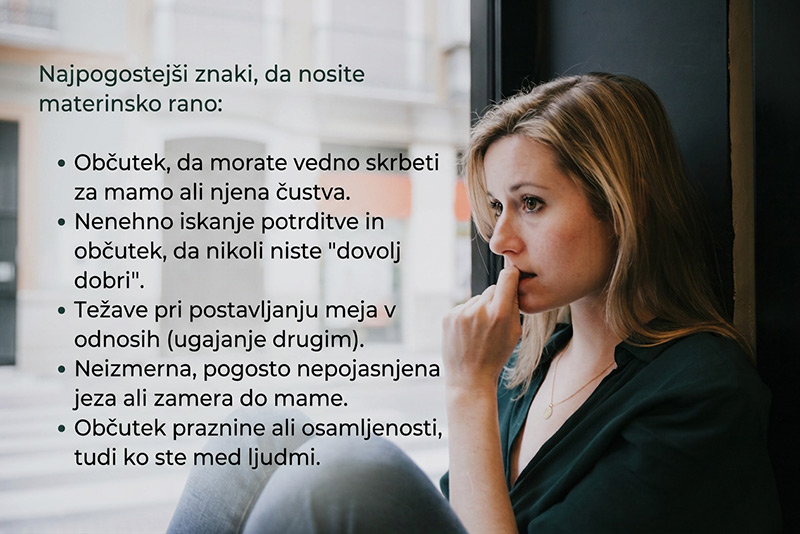
Of course, this does not apply to everyone, but these patterns emerge in many cases. The good news is that the healing process begins the moment we become aware of them.
When we begin to talk about our feelings and allow ourselves to experience anger without judging ourselves for it, new paths begin to open up. The anger gradually starts to fade. This is not about blaming or punishing our mothers. Many mothers are themselves victims of unresolved trauma and did the best they could with the resources they had.
It is about acknowledging our pain and giving ourselves permission to heal.
As Dr. Maté puts it: “Learn to read symptoms not merely as problems to be overcome, but as messages to be listened to.” [4]
We need to recognize what we lacked and allow ourselves to grieve that loss. This is not an attack on our parents, but an act of respect for our own inner child, who had to grow up too soon.
Note: This article is for informational purposes only and does not replace a personal consultation with a physician, psychotherapist, psychologist, or another qualified mental health professional.
Sources
[1]Widom, C. S., Czaja, S. J., Kozakowski, S. S., & Chauhan, P. (2018). Does Adult Attachment Style Mediate the Relationship between Childhood Maltreatment and Mental and Physical Health Outcomes? Child Abuse & Neglect, 76, 533–545.
[2] Dube, S. R., Fairweather, D., Pearson, W. S., Felitti, V. J., Anda, R. F., & Croft, J. B. (2009 ). Cumulative Childhood Stress and Autoimmune Diseases in Adults. Psychosomatic Medicine, 71(2), 243–250.
[3] Field, T. (1994 ). The effects of mother's physical and emotional unavailability on emotion regulation. Monographs of the Society for Research in Child Development, 59(2-3), 208-227.
[4] Maté, G. (2003 ). When the Body Says No: The Cost of Hidden Stress. Knopf Canada. (Citati povzeti po knjigi).